

Chinchilla lifespan is one of the first questions potential owners ask—and for good reason! If you’re thinking about welcoming a chinchilla into your home, or if you already have one of these adorable furballs bouncing around, understanding how long they live is crucial. The answer might surprise you! Chinchillas are among the longest-living rodents, and with proper care, they can be your companion for many wonderful years.
Let’s dive deep into everything you need to know about chinchilla lifespan, from wild populations to domestic pets, and discover how you can help your chinchilla live their longest, healthiest life possible.
Understanding Chinchilla Lifespan: The Basics
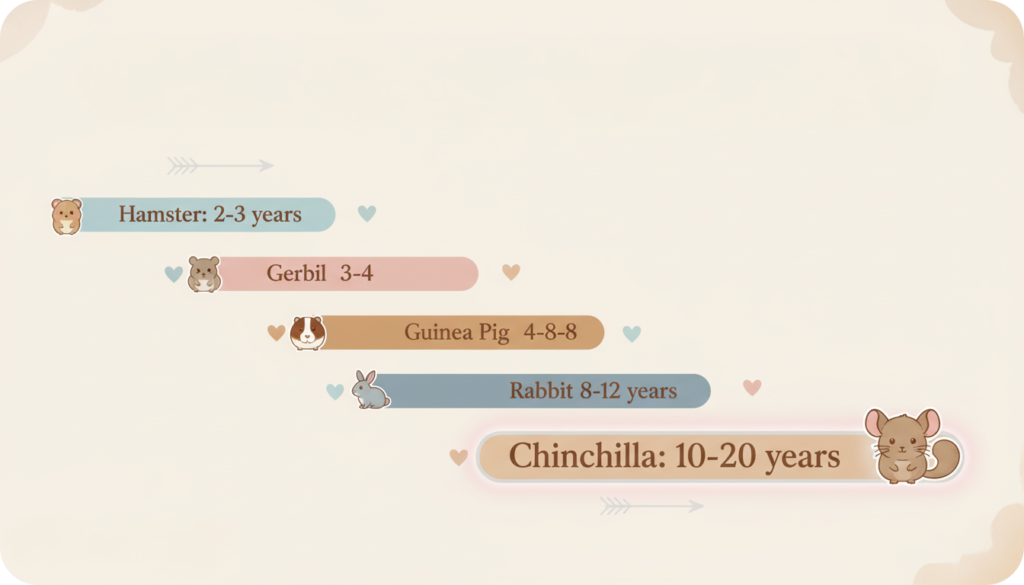
When it comes to the lifespan of chinchillas, these remarkable creatures stand out from other small pets. Unlike hamsters or gerbils that might only live a few years, chinchillas are in it for the long haul. The average lifespan of a chinchilla in captivity typically ranges from 10 to 20 years, with many pet chinchillas living well into their teens when given excellent care.
Think about that for a moment. A chinchilla lifespan in captivity can span two decades! That’s longer than many dogs live, and it means getting a chinchilla is a serious, long-term commitment. You’re not just getting a pet for a few years—you’re potentially gaining a companion who might be with you through major life changes, from college graduations to career moves.
The average chinchilla lifespan sits comfortably around 10-15 years for most domestic chinchillas, though it’s not uncommon to hear stories of chinchillas celebrating their 18th, 19th, or even 20th birthdays. The record chinchilla lifespan? Some chinchillas have lived beyond 20 years with exceptional care!
Chinchilla Lifespan: Wild vs. Captivity Compared
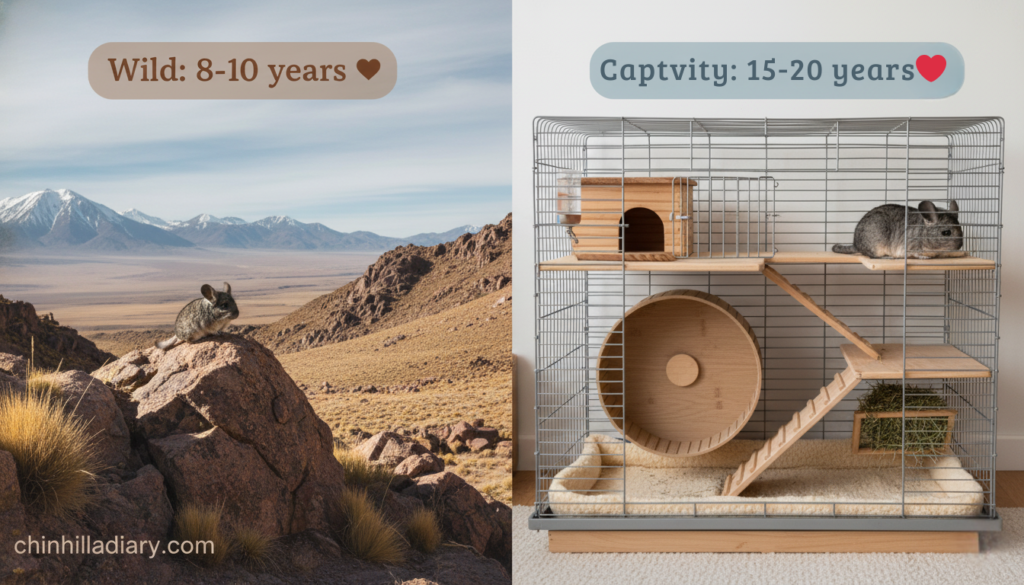
Here’s where things get interesting. The chinchilla lifespan in the wild is quite different from what we see in domestic settings. Wild chinchillas typically live 8-10 years, which might seem surprisingly short compared to their captive counterparts. But when you think about the challenges they face in their native Andean mountain habitats, it makes perfect sense.
Chinchilla Lifespan in the Wild
In the rugged mountains of Chile, wild chinchillas face daily challenges that domestic chinchillas never encounter. Predators like foxes, birds of prey, and wild cats constantly threaten their survival. Food scarcity during harsh winters, extreme temperature fluctuations, diseases without veterinary care, and the stress of finding safe shelter all take their toll.
The wild chinchilla lifespan reflects these harsh realities. While some hardy individuals might reach 10 years or slightly beyond, many don’t make it that far. It’s nature’s way—only the strongest and luckiest survive to old age.
Domestic Chinchilla Lifespan: The Advantages of Home Life
Now, let’s talk about the lifespan of domestic chinchillas. When you bring a chinchilla into your home, you’re essentially removing most of the survival pressures they’d face in the wild. Pet chinchilla lifespan benefits enormously from consistent food supply, protection from predators, climate-controlled environments, regular veterinary care, and a safe, stress-free living space.
The captive chinchilla lifespan regularly exceeds what’s possible in nature, with the lifespan of a chinchilla in captivity often reaching 15-20 years. Some chinchillas in optimal conditions have even surpassed this, making them one of the longest-lived rodent species you can keep as a pet.
Chinchilla Lifespan by Species and Breeds
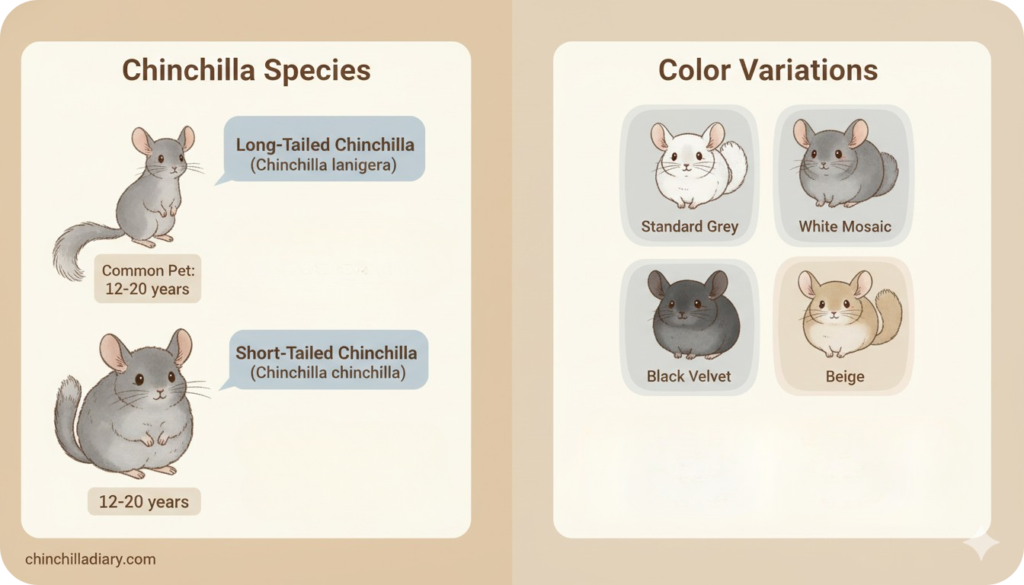
Not all chinchillas are created equal when it comes to lifespan. There are two main species of chinchillas, and understanding the differences can help you know what to expect.
Long-Tailed Chinchilla (Chinchilla lanigera)
The long-tailed chinchilla is the most common species kept as pets. When people talk about pet chinchillas, they’re almost always referring to this species. The long-tailed chinchilla lifespan in captivity is impressive, typically ranging from 12-20 years with proper care.
These are the chinchillas you’ll find in pet stores and from reputable breeders. The chinchilla lanigera lifespan benefits from generations of selective breeding for domestic life, making them well-adapted to captivity. With excellent care, the long-tailed chinchilla lifespan as pets can easily reach 15-18 years, with many individuals pushing into their early twenties.
Short-Tailed Chinchilla (Chinchilla chinchilla)
The short-tailed chinchilla is rarer and less commonly kept as a pet. These chinchillas are stockier and slightly larger than their long-tailed cousins. The short-tailed chinchilla lifespan is comparable to the long-tailed variety, though they’re so rare in captivity that we have less data on their longevity as pets.
The average lifespan of a short-tailed chinchilla in the wild is similar to the long-tailed species—around 8-10 years. However, the short-tailed chinchilla lifespan in captivity can also reach 15-20 years with proper care, assuming you can find one, as they’re critically endangered in the wild.
Color Variations and Lifespan
You might have heard about different chinchilla color morphs—white chinchillas, black chinchillas, mosaic chinchillas, and more. Here’s the good news: color doesn’t significantly impact lifespan. Whether you have a standard gray, a white mosaic chinchilla, or any other color variation, the chinchilla lifespan remains essentially the same. What matters is genetics, overall health, and the quality of care you provide.
Chinchilla-Related Animals: A Quick Comparison
While we’re on the topic of lifespan, it’s worth noting that some other animals share the “chinchilla” name but are entirely different species with very different lifespans.
Chinchilla Rabbits
The chinchilla rabbit lifespan is quite different from actual chinchillas. These rabbits, named for their chinchilla-like fur color, typically live 5-8 years. The American chinchilla rabbit lifespan and giant chinchilla rabbit lifespan fall into similar ranges, as do standard chinchilla rabbits. While these are wonderful pets in their own right, they’re rabbits, not rodents, and have their own specific care requirements and expected lifespans.
Chinchilla Cats
Similarly, Persian chinchilla cats and chinchilla Persian cats are feline breeds named for their silvery fur color. The chinchilla cat lifespan typically ranges from 12-17 years, which is standard for Persian cats. The average lifespan of a chinchilla cat is similar to other Persian varieties, and again, despite sharing a name, they’re completely unrelated to actual chinchillas.
Factors That Affect Chinchilla Lifespan
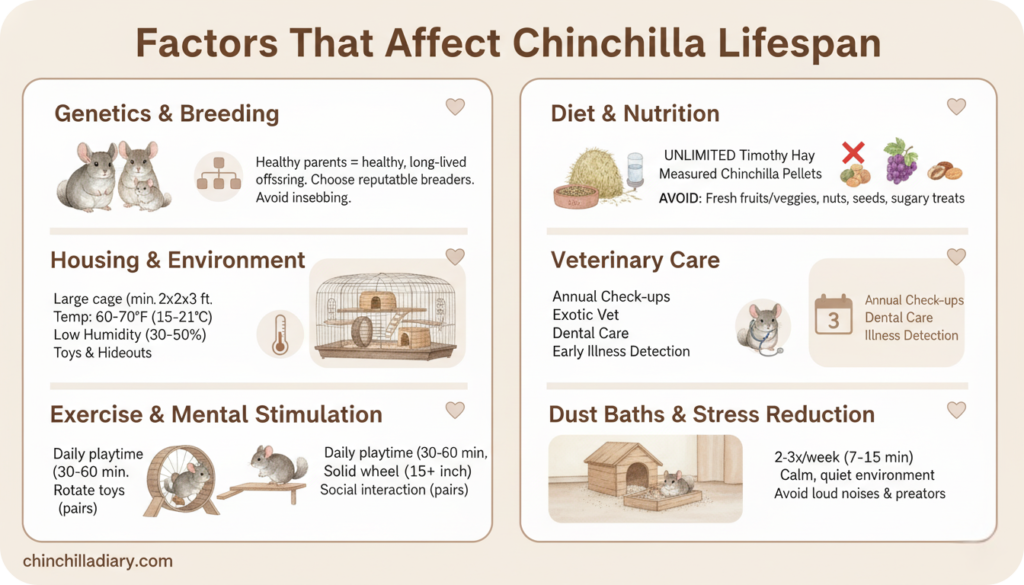
Now we’re getting to the heart of the matter. Understanding what influences the lifespan of a chinchilla can help you maximize your pet’s years with you. Let’s break down the key factors that determine how long your chinchilla will live.
Genetics and Breeding
Just like with humans, genetics play a significant role in chinchilla longevity. A chinchilla from a line of long-lived, healthy animals is more likely to enjoy a longer lifespan themselves. This is why choosing a reputable breeder matters—they select for health and longevity, not just appearance.
Inbreeding can shorten lifespan by increasing the likelihood of genetic health problems. Responsible breeders maintain diverse genetic lines to produce healthier animals with better chances at a long life.
Diet and Nutrition
You’ve heard the saying “you are what you eat,” and it absolutely applies to chinchillas. Diet is one of the most critical factors affecting the average lifespan of a pet chinchilla.
Chinchillas are herbivores with very specific dietary needs. In the wild, they eat grasses, seeds, and other plant materials that are low in fat and high in fiber. Replicating this diet at home is crucial for longevity.
A proper chinchilla diet should consist of high-quality hay (timothy hay is excellent) available at all times, providing the fiber necessary for digestive health. Chinchilla pellets should be specifically formulated for chinchillas—not rabbit or guinea pig food—and given in limited quantities (about 1-2 tablespoons daily). Fresh water should always be available in a clean water bottle. Treats should be given sparingly—chinchillas love raisins and dried fruits, but these are high in sugar and should only be occasional treats (think once or twice a week, not daily).
What you absolutely should NOT feed your chinchilla includes fresh fruits and vegetables (their digestive systems can’t handle the water content), nuts and seeds (too fatty), processed human foods, chocolate or anything toxic to animals, and foods high in sugar or fat.
Poor diet is one of the fastest ways to shorten a chinchilla’s lifespan. Obesity, diabetes, and digestive problems all stem from inappropriate feeding, and these conditions can significantly reduce the lifespan of chinchilla pets.
Housing and Environment
The living conditions you provide directly impact your chinchilla’s health and longevity. Chinchillas are active animals that need space to climb, jump, and play.
Your chinchilla’s cage should be large—the bigger, the better. A minimum of 2 feet wide by 2 feet deep by 3 feet tall for a single chinchilla, but larger is always preferable. Multi-level cages with ramps and platforms let chinchillas exercise their natural climbing behaviors.
Temperature control is critical. Chinchillas are adapted to cool mountain climates and are extremely sensitive to heat. The ideal temperature range is 60-70°F (15-21°C). Temperatures above 75°F (24°C) can cause heat stroke, which can be fatal.
This is one of the most important factors in captive chinchilla lifespan—many chinchillas have died from heat exposure that could have been prevented.
Humidity should be kept low, around 30-50%. High humidity combined with heat is particularly dangerous. Your chinchilla needs mental stimulation too—wooden toys, chew sticks, hidey houses, and wheels (with a solid running surface, not wire) all contribute to a happy, healthy chinchilla.
Veterinary Care
Regular veterinary care significantly extends the average pet chinchilla lifespan. Many people don’t realize that chinchillas need routine check-ups, just like dogs and cats. Finding an exotic pet veterinarian experienced with chinchillas is essential.
Annual health checks can catch problems early, when they’re most treatable. Dental issues are common in chinchillas—their teeth grow continuously throughout their lives. Regular monitoring prevents overgrown teeth, which can make eating difficult or impossible. Watching for signs of illness is crucial, as chinchillas often hide symptoms until disease is advanced.
Common health issues that affect chinchilla lifespan include dental problems (malocclusion, overgrown teeth), respiratory infections, gastrointestinal stasis (when the digestive system slows or stops), heat stroke, fur chewing (often stress-related), and bumblefoot (foot infections from wire cage floors).
Prompt veterinary attention for any health concerns can mean the difference between a quick recovery and a life-threatening situation.
Exercise and Mental Stimulation
Chinchillas are not cage potatoes! These active, intelligent animals need daily exercise and mental challenges to thrive. A sedentary chinchilla is an unhealthy chinchilla, and lack of activity definitely impacts the lifespan of chinchillas as pets.
Your chinchilla should have supervised out-of-cage time daily in a chinchilla-proofed area. This playtime allows them to run, jump, and explore, keeping both their bodies and minds active. Inside the cage, provide exercise wheels (solid surface only, at least 15 inches in diameter), climbing opportunities with ledges and branches, tunnels and hidey-holes for exploration, and rotate toys regularly to prevent boredom.
Mental health matters too! Chinchillas can experience depression and stress, which affects their physical health. Social interaction (chinchillas are social and often do well with same-sex pairs), environmental enrichment, and consistent routines all contribute to a happy, long-lived chinchilla.
Dust Baths
Here’s something unique to chinchillas: they don’t bathe in water—they bathe in dust! Chinchilla dust baths are essential for their health and happiness. These baths help maintain their incredibly dense fur by absorbing oils and moisture.
Offer a dust bath 2-3 times per week for about 10-15 minutes each time. Use only chinchilla-specific dust (not sand), and provide a dust bath house or container large enough for rolling and flipping. This grooming behavior is not just hygiene—it’s also stress relief and exercise, all contributing to overall wellbeing and longevity.
Stress Reduction
Chronic stress shortens life—that’s true for humans and chinchillas alike. Minimizing stress in your chinchilla’s life can positively impact their lifespan.
Common stressors include loud noises, rough handling, predatory pets (dogs and cats can stress chinchillas even if they can’t reach them), frequent cage location changes, inconsistent schedules, and poor cage mates (fighting or incompatible chinchillas).
Creating a calm, predictable environment helps your chinchilla feel safe and secure, which translates to better health and a longer life.
Gender Differences: Female vs. Male Chinchilla Lifespan
You might wonder if there’s a difference in lifespan between male and female chinchillas. The good news is that gender doesn’t significantly impact longevity. Both male and female chinchillas can live equally long lives when properly cared for.
That said, there are some minor considerations. Female chinchillas who have been bred multiple times may have slightly shortened lifespans due to the physical toll of pregnancy and birth. Breeding should be done carefully and not too frequently to protect the mother’s health.
Some owners report behavioral differences between genders—males might be slightly more laid-back while females can be more active—but these are generalizations and individual personality varies widely. What matters most for the female chinchilla lifespan or male longevity is the quality of care, not the sex of the animal.
Chinchilla Lifespan Stages: Baby to Senior
As your chinchilla ages, you’ll notice some changes. Understanding what’s normal helps you provide appropriate care at each life stage.
Baby Chinchilla Lifespan and Development
Baby chinchillas (called kits) are born relatively well-developed compared to other rodents. They have fur, open eyes, and can move around shortly after birth. The first year is crucial for establishing healthy patterns.
During their first 8-12 months, chinchillas are growing rapidly, developing their adult personalities, learning social behaviors, and establishing eating and activity patterns. Proper care during this period sets the foundation for a long life.
Adult Chinchillas (1-10 years)
This is your chinchilla’s prime. They’re energetic, playful, and generally healthy. This is when you’ll enjoy their personality most fully. Maintain consistent care during these years—the habits you establish now affect their senior years.
Senior Chinchillas (10+ years)
Chinchillas over 10 are entering their golden years. You might notice reduced activity levels, more sleeping, possible weight changes (loss or gain), graying fur (especially around the face), and increased health monitoring needs.
Senior chinchillas may need adjustments to their environment, such as lower cage platforms for easier access, softer bedding, more frequent health checks, and potentially diet modifications based on veterinary advice.
Many chinchillas remain active and healthy well into their teens and beyond. Don’t assume old age means poor quality of life—with appropriate care, senior chinchillas can enjoy their later years comfortably.
Maximizing Your Chinchilla’s Lifespan: Essential Care Tips
Let’s talk practical advice. Here are the most important things you can do to ensure your chinchilla lives the longest, healthiest life possible.
Optimal Diet Guidelines
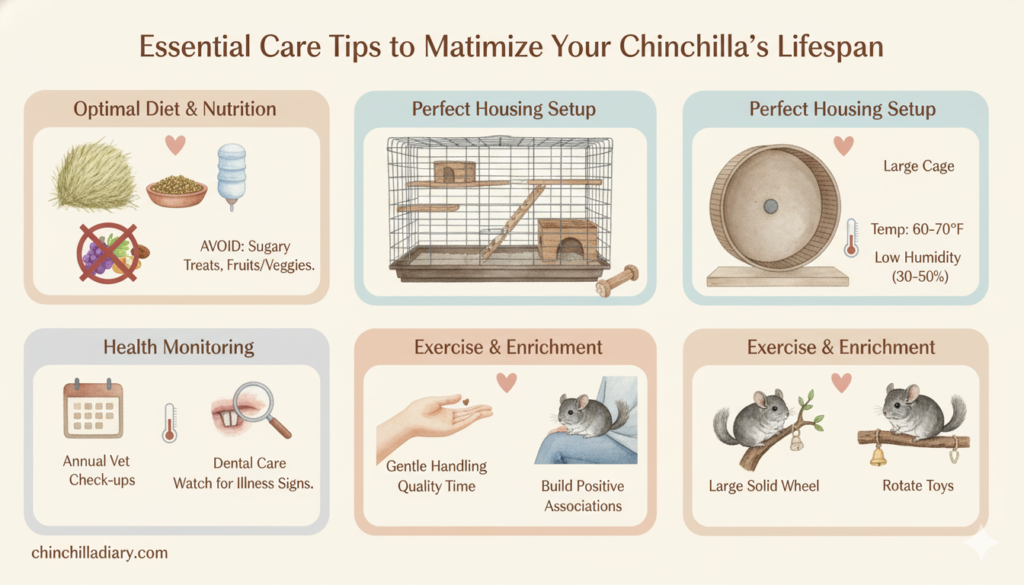
Feed high-quality timothy hay unlimited, always available. Provide chinchilla-specific pellets in controlled amounts (1-2 tablespoons daily). Offer occasional treats sparingly (once or twice weekly). Ensure fresh, clean water is always available.
Avoid all fresh fruits, vegetables, fatty foods, and anything high in sugar.
Perfect Housing Setup
Invest in a large, multi-level cage with solid platforms and ramps (no wire flooring). Maintain temperature between 60-70°F always. Keep humidity low (30-50%). Provide hiding spots, toys, and enrichment. Place the cage in a quiet area away from direct sunlight and drafts. Clean the cage regularly but maintain familiar scents (chinchillas are sensitive to change).
Health Monitoring
Watch for signs of illness including lethargy, loss of appetite, changes in droppings, difficulty breathing, discharge from eyes or nose, weight loss, and abnormal behavior. Schedule annual vet check-ups with an exotic pet specialist. Monitor teeth regularly for overgrowth or misalignment. Keep accurate records of weight, eating habits, and any health concerns.
Exercise and Enrichment
Provide daily supervised playtime outside the cage (30-60 minutes minimum). Offer an appropriately sized exercise wheel (15+ inches, solid surface). Rotate toys and enrichment items to prevent boredom. Consider a same-sex companion if appropriate (introduce carefully). Create climbing opportunities and exploration zones.
Building Trust and Bonding
A happy chinchilla is a healthy chinchilla. Spend quality time with your pet daily. Use gentle handling—never grab or squeeze. Respect their boundaries—chinchillas are prey animals and need to feel safe. Offer hand-fed treats occasionally to build positive associations. Talk to them regularly so they become familiar with your voice.
Common Mistakes That Shorten Chinchilla Lifespan
Let’s be honest—mistakes happen, especially with first-time chinchilla owners. Being aware of common pitfalls helps you avoid them.
Improper Diet
This is the number one mistake. Feeding unsuitable foods like fresh fruits and vegetables, too many treats, rabbit or guinea pig food instead of chinchilla pellets, or poor-quality hay can lead to digestive issues, obesity, diabetes, and shortened lifespan.
Temperature Problems
Keeping chinchillas in environments that are too warm is deadly. Many chinchillas die each year from heat stroke because their owners didn’t understand how heat-sensitive they are. Remember, anything above 75°F is dangerous, and above 80°F can be rapidly fatal.
Inadequate Veterinary Care
Skipping routine check-ups, ignoring early signs of illness, or not having an exotic vet established before emergencies occur can turn minor issues into life-threatening ones.
Poor Housing
Small cages, wire flooring (causes foot problems), lack of enrichment, placing cages in high-traffic or noisy areas, and using inappropriate bedding (cedar and pine shavings are toxic) all impact quality of life and longevity.
Isolation and Boredom
Chinchillas are intelligent, social creatures. Keeping them isolated without interaction, failing to provide mental stimulation, or leaving them in cages 24/7 without playtime leads to depression and stress-related health problems.
Improper Handling
Handling chinchillas roughly, not supporting their bodies properly, or allowing children to handle them without supervision can cause injuries and extreme stress.
Chinchilla Lifespan Across Different Settings
The environment where a chinchilla lives significantly impacts how long they’ll survive and thrive.
Pet Store and Commercial Breeding
Chinchillas from pet stores or large commercial breeders may have variable lifespans depending on their breeding and early care. Mass-breeding operations sometimes prioritize quantity over quality, potentially affecting genetic health. However, with excellent care after adoption, these chinchillas can still live full, long lives.
Reputable Breeders
Chinchillas from reputable, ethical breeders who focus on health and temperament often have the best genetic potential for long lifespans. These breeders select breeding pairs carefully, avoid inbreeding, provide excellent early care, and socialize kits properly.
Rescue and Adoption
Rescue chinchillas may have unknown backgrounds, but with proper care, they can enjoy long lives. Some rescue chinchillas are surrendered due to owner circumstances (moves, allergies, life changes) and are perfectly healthy. Others may have health issues or trauma from poor previous care. Age at adoption matters—adopting a younger chinchilla gives you more years together, but senior chinchillas deserve loving homes too and can still provide years of companionship.
Laboratory Settings
While not pets, it’s worth noting that chinchillas in research settings with controlled conditions, optimal diet, and veterinary oversight often achieve maximum lifespans, sometimes exceeding 20 years. This demonstrates what’s possible when all factors are optimized, though obviously, pet ownership aims for quality of life, not just longevity.
Real Stories: Record-Breaking Chinchilla Lifespans
While the average chinchilla lifespan is impressive, some chinchillas have lived extraordinarily long lives, setting records that inspire us all.
Though specific record-holders aren’t always well-documented, there are verified reports of pet chinchillas living into their mid-twenties—23, 24, even 25 years old! These exceptional cases share common factors: dedicated, knowledgeable owners who provided optimal care throughout the chinchilla’s life, high-quality diet strictly maintained, excellent genetics from responsible breeding, appropriate housing and temperature control, regular veterinary care throughout life, and often, same-sex companion chinchillas for social enrichment.
These extraordinary lifespans show what’s possible and remind us that the care we provide directly impacts how long our chinchillas will be part of our families.
Comparing Chinchilla Lifespan to Other Pets
To put the chinchilla lifespan in perspective, let’s compare them to other common pets.
Small Pets:
- Hamsters: 2-3 years
- Gerbils: 3-4 years
- Guinea pigs: 4-8 years
- Rats: 2-3 years
- Rabbits: 8-12 years
- Chinchillas: 10-20 years
Other Pets:
- Cats: 12-18 years
- Dogs: 10-13 years (varies widely by breed)
- Parrots: 20-80+ years (depending on species)
As you can see, chinchillas outlive most other rodents and small pets by a significant margin. Only parrots typically outlive them among common pets. This longevity makes chinchillas unique in the small pet world but also means potential owners need to seriously consider the long-term commitment.
The Cost of a Long Chinchilla Lifespan
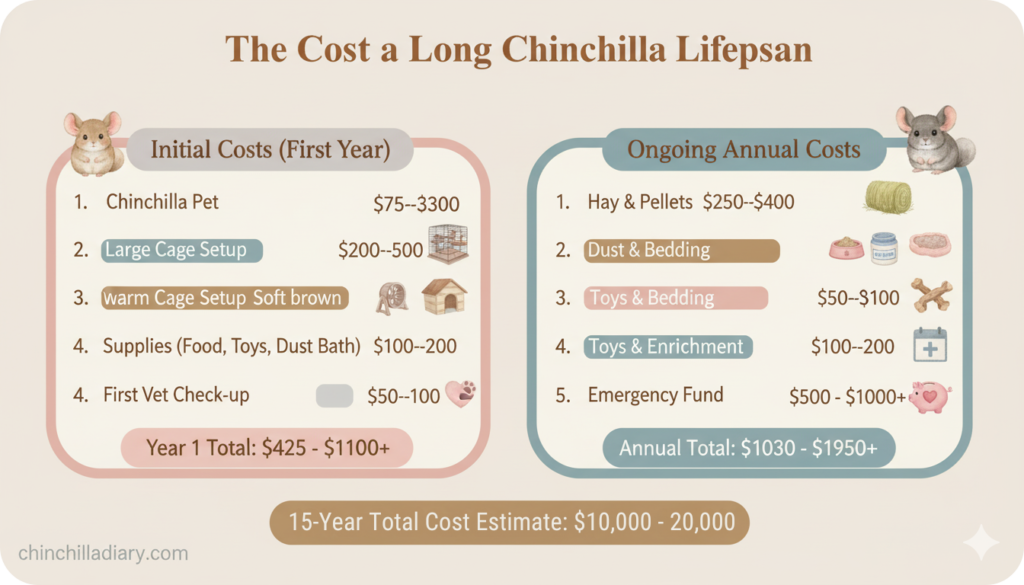
When considering chinchilla ownership, it’s important to understand the financial commitment. A 15-20 year lifespan means 15-20 years of expenses.
Initial Costs
The chinchilla itself can cost anywhere from $75-$300, depending on source and color morph. A proper cage setup costs $200-$500. Initial supplies like food bowls, water bottles, toys, dust bath house, and hay rack cost $100-$200. Your first veterinary check-up is around $50-$100.
Ongoing Annual Costs
High-quality hay costs approximately $200-$300 per year. Chinchilla pellets cost about $50-$100 per year. Chinchilla dust costs $30-$50 per year. Bedding costs $100-$200 per year. Toys and enrichment items cost $50-$100 per year. Annual veterinary check-ups cost $100-$200. Emergency vet funds should be set aside at $500-$1,000+ per year.
Over a 15-year lifespan, you’re looking at $10,000-$20,000 or more in total costs. This isn’t meant to discourage you—chinchillas are wonderful companions—but being financially prepared ensures you can provide excellent care throughout their life.
Preparing for Your Chinchilla’s Full Lifespan
Committing to a chinchilla means preparing for the long haul. Here are some things to consider before bringing one home.
Life Changes
Think about where you’ll be in 15-20 years. Will you be able to move a chinchilla if you relocate? College students: can you care for a chinchilla through graduation, job changes, and moves? Families: will your children maintain interest, or will you take over care? Are you prepared for the financial commitment through potential job changes?
Finding Backup Care
Establish a network of support for vacations, emergencies, and potential life circumstances. Not everyone can care for chinchillas—they have specific needs. Having trusted backup caregivers or knowing boarding facilities that handle exotics is essential.
End-of-Life Planning
This is difficult to think about, but responsible pet ownership includes being prepared for your pet’s eventual passing. Know where exotic pet cremation or burial services are available in your area. Be financially prepared for potential end-of-life veterinary care. Consider the emotional impact—chinchillas often become beloved family members, and their loss can be genuinely difficult.
Making the Commitment
If you’re prepared to provide 10-20 years of excellent care, you’re ready for a chinchilla. These remarkable animals reward dedicated owners with years of companionship, entertainment, and affection.
Frequently Asked Questions About Chinchilla Lifespan

Let’s address the most common questions people have about how long chinchillas live.
What is the lifespan of a chinchilla?
The lifespan of a chinchilla typically ranges from 10 to 20 years in captivity, with an average of around 12-15 years. This makes them one of the longest-lived rodents you can keep as a pet.
How long is a chinchilla’s lifespan?
A chinchilla’s lifespan depends on the quality of care they receive. With proper diet, housing, temperature control, and veterinary care, most pet chinchillas live 12-18 years, with many reaching 20 years or beyond.
What is the average lifespan of a chinchilla?
The average lifespan of a chinchilla in captivity is approximately 12-15 years. However, this is just an average—many chinchillas live well into their late teens or early twenties with excellent care.
What is the lifespan of a pet chinchilla?
The lifespan of a pet chinchilla is significantly longer than wild chinchillas, typically ranging from 10-20 years. Domestic chinchillas benefit from consistent nutrition, protection from predators, climate control, and veterinary care, all of which extend their lives considerably.
What is the lifespan of a chinchilla in captivity?
The lifespan of a chinchilla in captivity is generally 10-20 years, with 15 years being a common age for well-cared-for individuals. Captivity offers protection from the harsh conditions and threats wild chinchillas face, allowing them to live much longer.
What is the average lifespan of a pet chinchilla?
The average lifespan of a pet chinchilla is around 12-15 years, though this varies based on genetics, diet, housing conditions, and overall care quality. Many pet chinchillas exceed this average with dedicated care.
What is the lifespan of a long-tailed chinchilla?
The lifespan of a long-tailed chinchilla (Chinchilla lanigera) in captivity is typically 12-20 years. This is the most common species kept as pets, and they generally live longer in domestic settings than in the wild.
What is the lifespan of a short-tailed chinchilla?
The lifespan of a short-tailed chinchilla is similar to long-tailed chinchillas, ranging from 12-20 years in captivity. However, short-tailed chinchillas are rare as pets due to their endangered status in the wild.
How long is a chinchilla’s lifespan in the wild?
In the wild, a chinchilla’s lifespan is typically 8-10 years. Wild chinchillas face predation, food scarcity, harsh weather, and diseases without treatment, all of which reduce their longevity compared to captive chinchillas.
What is a short-tailed chinchilla’s lifespan?
A short-tailed chinchilla’s lifespan in captivity can reach 15-20 years with proper care, similar to long-tailed chinchillas. In the wild, they typically live 8-10 years due to environmental challenges and predation.
Conclusion: Maximizing Your Chinchilla’s Lifespan
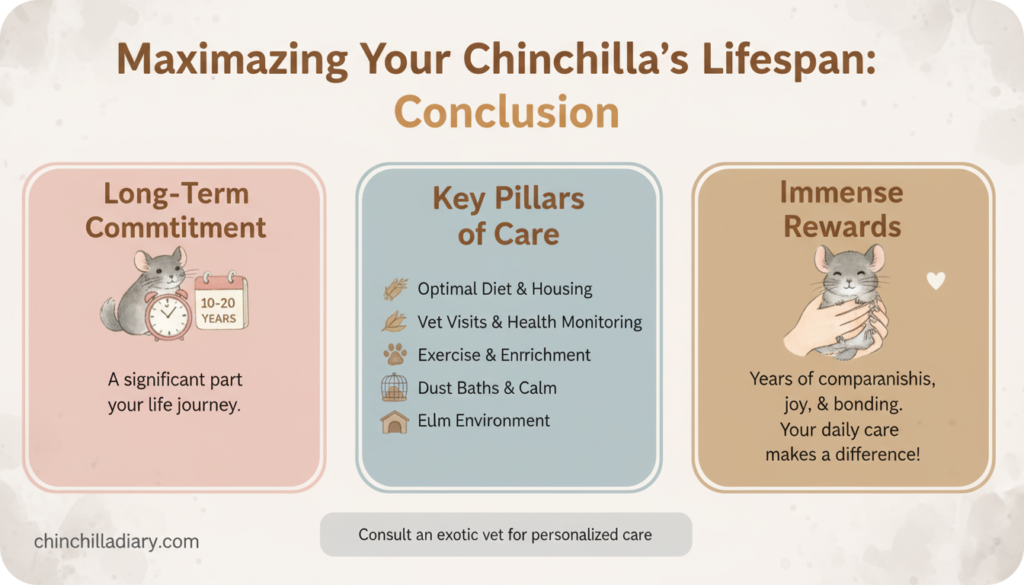
The lifespan of chinchillas is truly remarkable in the world of small pets. These fluffy, playful creatures can be part of your family for up to two decades—a significant portion of your life and potentially all of theirs.
Understanding what influences chinchilla longevity empowers you to provide the best possible care. From proper diet and appropriate housing to temperature control and regular veterinary visits, every aspect of care contributes to whether your chinchilla reaches their full life potential.
The commitment to a pet chinchilla is substantial, but for those prepared to provide consistent, knowledgeable care, the rewards are immense. Watching your chinchilla’s personality develop over years, enjoying their playful antics during dust baths, and bonding with these intelligent creatures makes every moment worthwhile.
Whether you’re considering your first chinchilla or you’re already years into the journey with your furry friend, remember that you have the power to influence their lifespan through the daily care and love you provide. Here’s to many happy, healthy years with your chinchilla companion!
Remember: This article provides general information about chinchilla lifespan and care. Always consult with a qualified exotic animal veterinarian for specific health concerns or questions about your individual chinchilla. Every chinchilla is unique, and their care should be tailored to their specific needs.


Leave a Reply